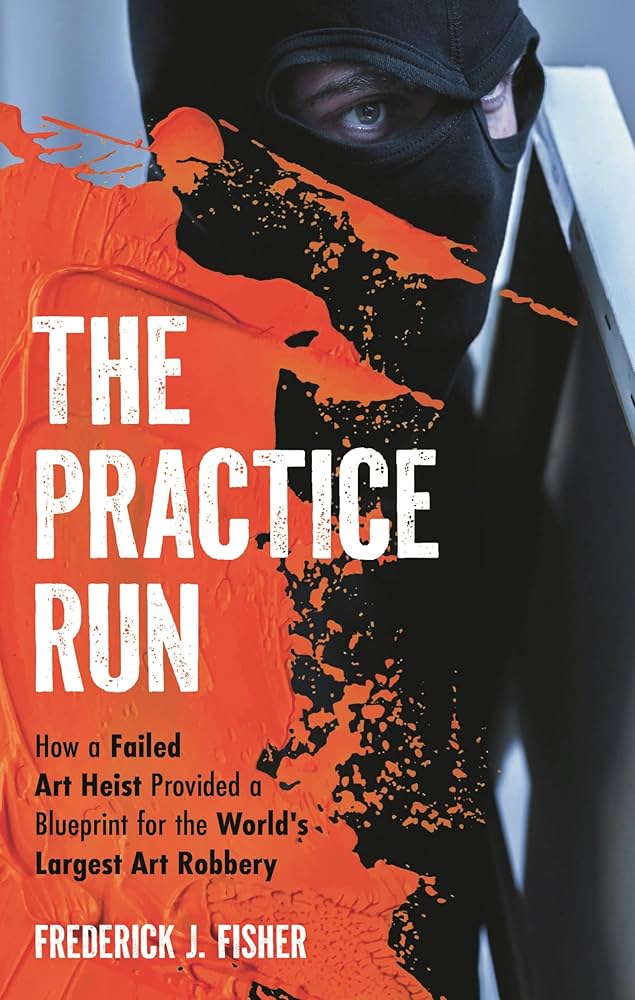
On St. Patrick's Day, 1990, two thieves posing as police officers stole 13 masterworks from Boston's Isabella Stewart Gardner Museum — the largest art theft in history. This is the untold story of the practice run that may have made it possible.
Two men posing as police officers entered the Isabella Stewart Gardner Museum in Boston at 1:24 AM on St. Patrick's Day, 1990. They bound the security guards and spent 81 minutes removing 13 works — including Vermeer's The Concert, Rembrandt's only seascape, and five Degas sketches. The empty frames still hang on the museum walls today. A $10 million reward remains unclaimed. The FBI claims the perpetrators are deceased but has never named them.
In the spring of 1980, a young man posing as a Vanderbilt heir and freelance writer arrived in Glens Falls, New York. He spent two months ingratiating himself with the director of The Hyde Collection — a small but extraordinary art museum modeled after the Gardner in Boston. His attempted robbery, using two men posing as delivery workers, was thwarted. He was arrested. He was also named Brian McDevitt of Swampscott, Massachusetts. The author of this book was that museum director. He was there.
Posing as a Vanderbilt heir and freelance writer, Brian McDevitt spends two months cultivating trust with Frederick J. Fisher, director of The Hyde Collection — extracting security details, staff schedules, and layout information.
Two men posing as delivery workers attempt to rob The Hyde Collection. They are thwarted. McDevitt is arrested and serves jail time in both New York State and Massachusetts. The museum escapes with its collection intact — but the blueprint has been drawn.
The FBI discovers a separate plot by Boston criminals to rob the Gardner Museum. Security upgrades follow — but remain insufficient. No interior cameras are installed; the board considers the cost prohibitive.
At 1:24 AM, two men posing as police officers are buzzed into the Gardner by a security guard. They bind both guards, disable the alarm, and spend 81 minutes removing 13 works. They are never caught. The empty frames remain hanging to this day.
Following the Gardner heist, McDevitt reinvents himself in Los Angeles as a screenwriter. When his criminal past surfaces on the West Coast, he flees to South America to avoid extradition. He dies there under circumstances that have never been fully explained.
The FBI claims the perpetrators are deceased but has never publicly identified them. Some investigators raise the possibility that McDevitt is in witness protection. The Gardner's 13 empty frames still await their paintings. The $10 million reward goes unclaimed.